Thursday, December 14, 2017

Merry Grinchmas

Merry Grinchmas
TOMORROW and Monday
Willard 8th graders, how will you dress tomorrow? 
Elementary students from Willard City Schools and St. Francis will be coming through as you act out the scenes.  


Thursday, December 7, 2017

Chapter 5 - Road to Revolution

Summary
Conflict between the 13 colonies and Great Britain began after Britain defeated France and its Indian allies in the French and Indian War. Burdened with war debt, the British Parliament tried raising revenue by passing a number of acts imposing taxes on the 13 colonies. Angered by taxes, the colonists protested. Peaceful protest turned violent and the British government reacted by passing harsh laws and levying more taxes. Tensions increased until the colonists and the British engaged in battle at Lexington and Concord in 1775. These battles marked the start of the American Revolution.


Chapter Outline
Section 1: Trouble on the Frontier


Section 2: The Colonists Resist Tighter Control


Section 3: From Protest to Rebellion


It's 1763. You're a basically happy, content colonist in North America. British and proud of it. The French and Indian War has just ended. Peace reigns on the continent.
Click here to play the game.

The Road to Revolution - Challenge board that reviews key concepts (and some trivia!) from Chapter Eleven

Jeopardy

The long road to change: America's revolution, 1750-1820 By Eric Guest Nellis

The Stamp Act Crisis: Prologue to Revolution By Edmund Sears Morgan, Helen M. Morgan, Institute of Early American History and Culture


Spreading the Word of the Revolution-Interactive


UK, Great Britain, England Explained

Disclose.tv - UK, Great Britain, England explained Video

Monday, December 4, 2017

Chapter 5 Section 4 - The War Begins

Summary

A Second Continental Congress created the Continental Army and chose George Washington as the commander. The Congress also sent the Olive Branch Petition to King George III as a last chance to avoid war. The petition was refused. In March 1776, Washington’s troops forced the redcoats out of Boston. The British forces retreated into Canada. Many Americans wanted independence from Britain, but not everyone agreed. While Congressional delegates debated the issue, a committee drafted a Declaration of Independence. Congress approved a final version of this document on July 4, 1776.

Login to read Chapter 5 Section 4 - The War Begins

Guided Reading AKA Notetaking and study guide - Chapter 5 Section 4 - The War Begins


  Progress Monitoring Self-Check Quiz Online


Check your answers by clicking on the comment tab

Wednesday, November 29, 2017

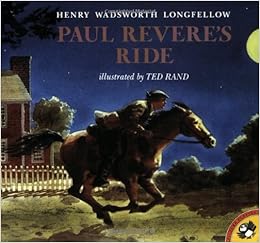
Paul Revere


Compare the poem by Henry Wadsworth Longfellow and the deposition of Paul Revere. Create a Venn Diagram in your interactive notebook showing the comparisons.  Then, create a timeline of the real events of Paul Revere's midnight ride.

The Midnight Ride of Paul Revere by Longfellow

The Deposition by Paul Revere


Image result for the midnight ride of paul revere poem

Friday, November 17, 2017

Chapter 5 Section 3 - From Protest to Rebellion

Summary
In 1773, the Tea Act allowed the British East India Company to ship tea to the colonies without paying most of the taxes. Now at a disadvantage, colonial merchants called for a new boycott. Enraged, the Boston Sons of Liberty threw chests of tea off British ships in what has become known as the Boston Tea Party. King George III tried to punish the people of Massachusetts with the harsh Coercive Acts that closed Boston Harbor and took away colonists’ rights.
Colonial leaders met in Philadelphia to discuss their opposition to British policy. The Continental Congress, as they called their organization, called on people to arm themselves and form militias to fight the growing British army.
One night in 1775, as redcoats left Boston for Concord, colonial minutemen were able to give advance warning to militias along the way. The first conflicts were in Lexington and Concord.

https://drive.google.com/file/d/0BzFdzvj4E9n8aUViLVZrN2FRY0k/view?usp=sharing

Read your Textbook Online!
Click here to read or listen to your textbook online

Guided Reading AKA Notetaking and study guide - Chapter 5 Section 3 - From Protest to Rebellion

A typo was made on the Guided Reading.  "April 18, 1776" should be "April 18, 1775."


Maps In Motion - Battles of Lexington and Concord

Liberty Kids - The Boston Tea Party


Liberty Kids - The Intolerable Acts


Liberty Kids - The Midnight Ride


Online Flashcards


More Online Flashcards

Progress Monitoring Online Quiz

Learn More about the home of Paul Revere by clicking here


Check your answers by clicking on the comment tab.

Monday, November 13, 2017

Chapter 5 Section 2 - Colonists Resist Tighter Control

Summary
After the French and Indian War, Great Britain passed laws that prohibited colonists from moving west, and issued new taxes to raise needed funds. Colonists, who believed only their own representatives had the right to tax them, resented laws such as the Stamp Act, and formed protest groups such as the Sons and Daughters of Liberty, and organized boycotts of British goods.

Read your Textbook Online!
Click here to read or listen to your textbook online

Notetaking and study guide AKA Guided Reading - Chapter 5 Section 2 - Colonists Resist Tighter Control


Check your answers by clicking on the comment tab below.


What the Sons of Liberty DocuDrama on the History Channel.


Saturday, November 4, 2017

Chapter 5 Section 1 - Trouble on the Frontier

Summary
Both Great Britain and France wanted control of lands west of the Appalachian Mountains. The rivalry between them grew tense in the 1740s. Although the French had many Native American allies, the Iroquois Confederacy finally sided with the British. The American colonists prepared to defend themselves against the French, but were not willing to approve the Albany Plan of Union and fight together against the French and their Native American allies.
Though the French and Indian War raged through the early 1760s in North America, it was part of a larger, global struggle between the British and French for control of trade. Native Americans easily defeated British troops under General Edward Braddock. British Prime Minister William Pitt helped turn the tide to the colonists’ favor. He decided that Britain would pay for the war – no matter the cost.
The fall of Quebec and Montreal ended the French and Indian War. With the Treaty of Paris, France gave up Canada and other lands to Great Britain. The treaty also left the Native Americans without allies and trading partners.

Read your Textbook Online!
Click here to read or listen to your textbook online

Notetaking and study guide - Chapter 5 Section 1 - Trouble on the Frontier


Animated Geography - French and Indian War


Newspaper Coverage of the English and French War 1754–1760

Braddock's Defeat
by George Washington
July 18, 1755

This letter, written by 23-year-old George Washington to his mother, Mary Washington, describes the battle near Pittsburgh in the French and Indian War in which the British and British Colonial forces under General Braddock were defeated.


HONORED MADAM: As I doubt not but you have heard of our defeat, and, perhaps, had it represented in a worse light, if possible, than it deserves, I have taken this earliest opportunity to give you some account of the engagement as it happened, within ten miles of the French fort, on Wednesday the 9th instant.
We marched to that place, without any considerable loss, having only now and then a straggler picked up by the French and scouting Indians. When we came there, we were attacked by a party of French and Indians, whose number, I am persuaded, did not exceed three hundred men; while ours consisted of about one thousand three hundred well-armed troops, chiefly regular soldiers, who were struck with such a panic that they behaved with more cowardice than it is possible to conceive. The officers behaved gallantly, in order to encourage their men, for which they suffered greatly, there being near sixty killed and wounded; a large proportion of the number we had.
The Virginia troops showed a good deal of bravery, and were nearly all killed; for I believe, out of three companies that were there, scarcely thirty men are left alive. Captain Peyrouny, and all his officers down to a corporal, were killed. Captain Polson had nearly as hard a fate, for only one of his was left. In short, the dastardly behavior of those they call regulars exposed all others, that were inclined to do their duty, to almost certain death; and, at last, in despite of all the efforts of the officers to the contrary, they ran, as sheep pursued by dogs, and it was impossible to rally them.
The General was wounded, of which he died three days after. Sir Peter Halket was killed in the field, where died many other brave officers. I luckily escaped without a wound, though I had four bullets through my coat, and two horses shot under me. Captains Orme and Morris, two of the aids-de-camp, were wounded early in the engagement, which rendered the duty harder upon me, as I was the only person then left to distribute the General's orders, which I was scarcely able to do, as I was not half recovered from a violent illness, that had confined me to my bed and a wagon for above ten days. I am still in a weak and feeble condition, which induces me to halt here two or three days in the hope of recovering a little strength, to enable me to proceed homewards; from whence, I fear, I shall not be able to stir till toward September; so that I shall not have the pleasure of seeing you till then, unless it be in Fairfax... I am, honored Madam, your most dutiful son.


Check your answers by clicking on comments below.

Thursday, November 2, 2017

Chapter 4 Review

Summary

The United States' economy relied heavily upon slave labor. The Civil War was a direct outgrowth of the country's divisions over slavery. Compared to Europe, colonists had greater opportunity to change social class. Enlightenment thinkers like Locke and Montesquieu, who emphasized rational thinking, helped inspire the Revolution, the Constitution, and slavery's end. These ideas continue to help shape American democratic thought today.
Chapter Outline


Section 1: Governing the Colonies
Section 2: Colonial Society
Section 3: Slavery in the Colonies
Section 4: The Spread of New Ideas


Audio Visual Review

Review Guide


Triangular Trade Routes

Explore the lives of colonial women.

Interactive Timeline

Self Check Test

Jeopardy


Atlantic Slave Trade Video

The Atlantic Slave Trade

Roots of Democracy

Friday, October 27, 2017

Quizlet - Vocabulary Practice

Today's Steps
Quizlet.com
Vocab Ch 4
HMWK - Practice Quizlet for Test


Go to Quizlet.com and create an account using your school Google account.  Then click on the directions below to create a quizlet.

Click here for directions to make a quizlet.

Thursday, October 19, 2017

Supplies for our Financial Literacy Project Tomorrow


5 lbs flour5 lbs sugar
doz. eggs1 lb butter
1 lb frozen raspberries1 lb butter
1 lb frozen raspberries
1 box of corn starch
salt
1 box of corn starch
vanilla
1 box of corn starch

Saturday, October 14, 2017

Chapter 4 Section 1 - Governing the Colonies

Summary
England viewed its North American colonies as an economic resource, and passed Navigation Acts to prevent colonists from trading with other countries. English colonists, however, brought with them a belief in limited and representative government and would come to resent these imposed restrictions. As they grew, the colonies established forms of self-government. They consisted of charter, proprietary, and royal. An American culture began to develop that valued education, religion, family life, scientific curiosity, and a free press.

Read your Textbook Online!
Click here to read or listen to your textbook online

Notetaking and study guide - Chapter 4 Section 1 - Governing the Colonies


Progress Monitoring - Self Check Quiz online


Enrichment Activity

Research New York Times v. Sullivan

There have been a number of important court cases that have helped define freedom of the press since the Zenger case. Research one such case, New York Times v. Sullivan. Summarize the case in your own words and then write a few sentences explaining your reaction to the Supreme Court's decision.

Monday, October 9, 2017

Chapter 3 Section 4 - The Southern Colonies


Summary

Maryland began as a safe haven for Catholics who were being persecuted in England. Many Protestants settled there as well, which led to religious and political tensions. Meanwhile, Virginia settlers continued to push westward, in defiance of agreements Virginia’s governor had made with Native Americans.

Although originally intended to be one colony, Carolina split into North Carolina and South Carolina. Georgia was founded in 1733 for poor people and debtors. The Carolinas and Georgia developed into major Southern Colonies.

The French were able to establish good relations with Native Americans as they gradually expanded their lands, along with their fur trade, towards the interior of the continent. Spain founded settlements in the Southwest of the present-day United States. The Spaniards built missions to convert Native Americans to Christianity. Native Americans were forced to labor in fields and workshops.

Read your Textbook Online!
Click here to read or listen to your textbook online

Guided Reading AKA Notetaking and study guide - Chapter 3 Section 4 - The Southern Colonies 


Notes for Foldable - Southern Colonies

The Southern Colonies Interactive Map


The Southern Colonies' Resources Map


Blank Southern Colonies Map

Founding of the 13 Colonies - Maps in Motion


Progress Monitoring - Self Check Quiz online


Sunday, October 8, 2017

Saturday, October 7, 2017

Progress Monitoring 3-3


Check your answers by clicking on the comments.

Friday, October 6, 2017

Write your Today's Steps in your assignment book. Then follow the slide show.


Click here for seating charts.

Remember Study Island is due by midnight tonight!  Get this done during Flashtime if you do not have internet access at home!

Thursday, October 5, 2017

Chapter 3 Section 3 - The Middle Colonies

Summary

After seizing the Dutch colony of New Netherlands, the English renamed it New York and formed the New Jersey colony. The land that became the colony of Pennsylvania was given to William Penn as payment for a debt to his father. Penn intended the colony to be a home for the pacifist Quakers, negotiated treaties with Native Americans, and designed the city of Philadelphia.

Read your Textbook Online!
Click here to read or listen to your textbook online

Notetaking and study guide - Chapter 3 Section 3 - The Middle Colonies

Notes for Foldable - Middle Colonies

Maps in Motion - Middle Colonies

The Middle Colonies - Interactive Map


The Middle Colonies' Resources Map


Blank Middle Colonies Map


Progress Monitoring - Self Check Quiz online


Outline of Chapter 3 Section 3

Wednesday, October 4, 2017

Salem Witch Trials


Check your answers by clicking on the comments.